
“I first came to Nutmeg as a high school student. The instructors showed me what was possible in aviation. They gave me the fundamental skills I needed to enter an aviation program where I am on my way to a being a career pilot!”
Start Your Dream @ Nutmeg
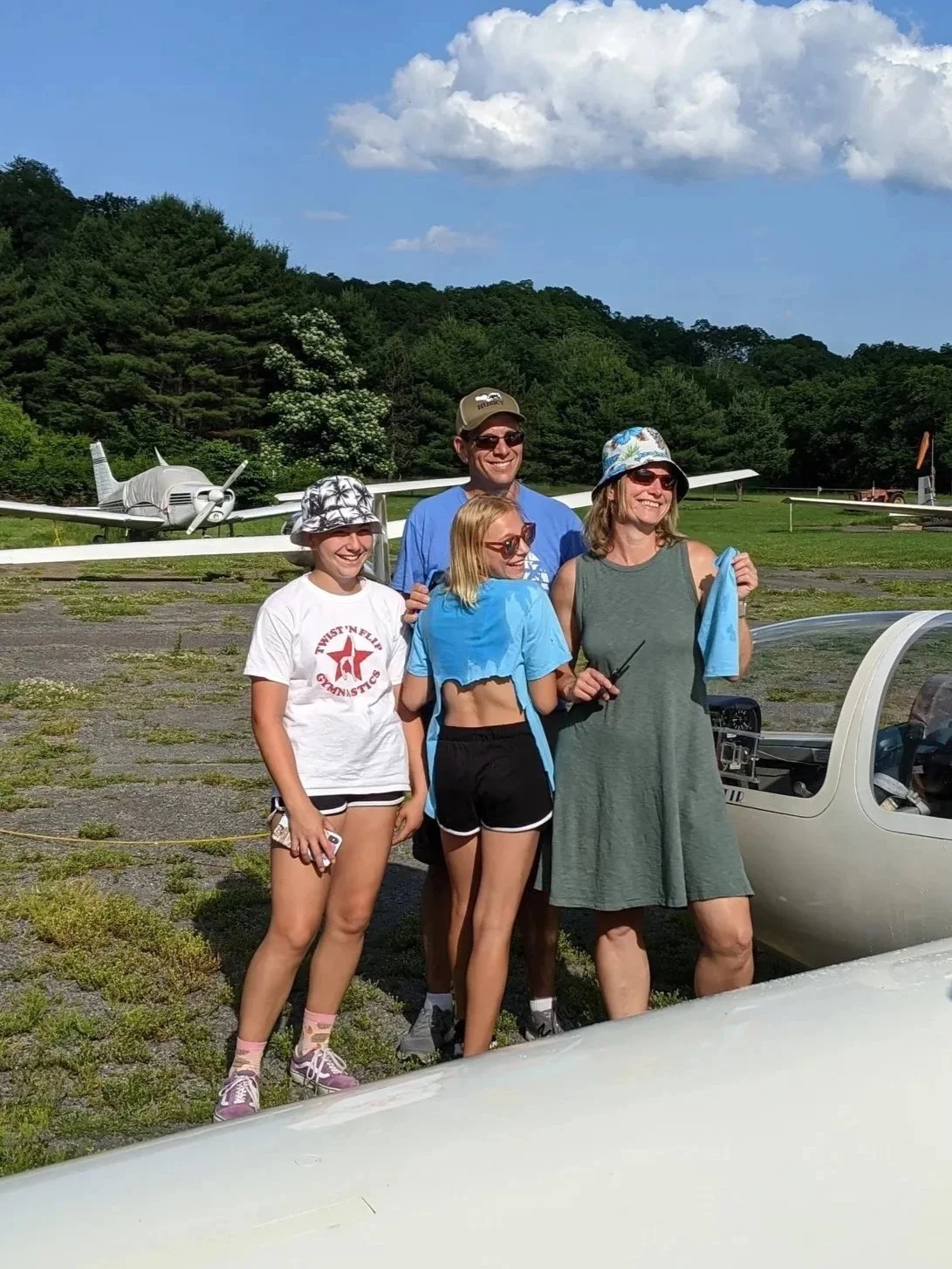
Teaching the Art of Soaring since 1956
-
Teaching the Art of Soaring since 1956 -
Why Should You Soar
Soaring is a pure form of human flight. There is no motor to keep you aloft; you must rely on your understanding of physics and nature to harvest energy from the atmosphere. This presents a unique challenge to you and develops your skill and knowledge as a pilot.
Frequently Asked Questions
-
A tow-plane tows the glider up, using a 200-foot nylon rope. The glider pilot pays for each tow ($48) to 3000 feet above the ground. This price covers the cost of operating the tow-plane -- tow pilots are volunteers (i.e., they are not paid).
-
Usually about 20 minutes, for instructional flights. If soaring conditions are good, flights can last for several hours. A 5-hour flight is one of the requirements for the silver badge of the Soaring Society of America.
-
Wind is not the key ingredient -- what a glider pilot needs is rising air. If you find rising air, then you circle the glider to stay in it. On most days, air rises as a result of the sun heating the ground, and therefore the air at ground level. The heated air rises, until it is in air with the same density. So we need sunny days, with unstable air. Usually the heated air rises high enough for the moisture to condense and form a cloud, the 'heap' cloud (cumulus cloud) of good-weather summer days. Cumulus clouds, the ones that look like big balls of cotton in the sky, promise a lot of "lift" and long glider flights.
-
You fly with an instructor in a 2-seater, dual-control glider; you're in the front seat, the instructor is in the back seat, and you each have a set of controls. Flying a glider (or other aircraft) straight and level is pretty easy, it really flies itself. More difficult are turns, flying on tow behind the towplane, takeoffs and landings. The FAA requires you to pass a written test and have 30 flights before you can take the exam to get a pilot's license. Teenagers learn very quickly (you can get a glider license at age 14); adults learn somewhat slower.
There is no charge for the 'use' of an instructor or a club glider; you pay for the tow.
-
Powered aircraft pilots can get an Add-On Glider rating with reduced requirements. There is no need for a written test. You will need a minimum of 3 hours of fight time and 10 solo flights during which 360 degree turns have been made before your practical test. You will need to have covered glider specific maneuvers such as boxing the wake, and be able to answer any question about glider flight in the practical.
I you have a Commercial rating and 200+ hours, then 20 solo flights will qualify you for a Commercial glider rating. If you are at 200 hours and do not have the Commercial rating already then you still need to take the Commercial written test.
There is a path to convert your CFI to a CFI-G, but it is best to talk with one of our current instructors about the process.
-
Soaring is much more of a sport. It combines knowledge and skill to read the skies and find pockets or rising air to stay aloft. Many power pilots find soaring not only a challenging diversion but an exceptional opportunity to sharpen their existing skills.
Do a Demo Flight
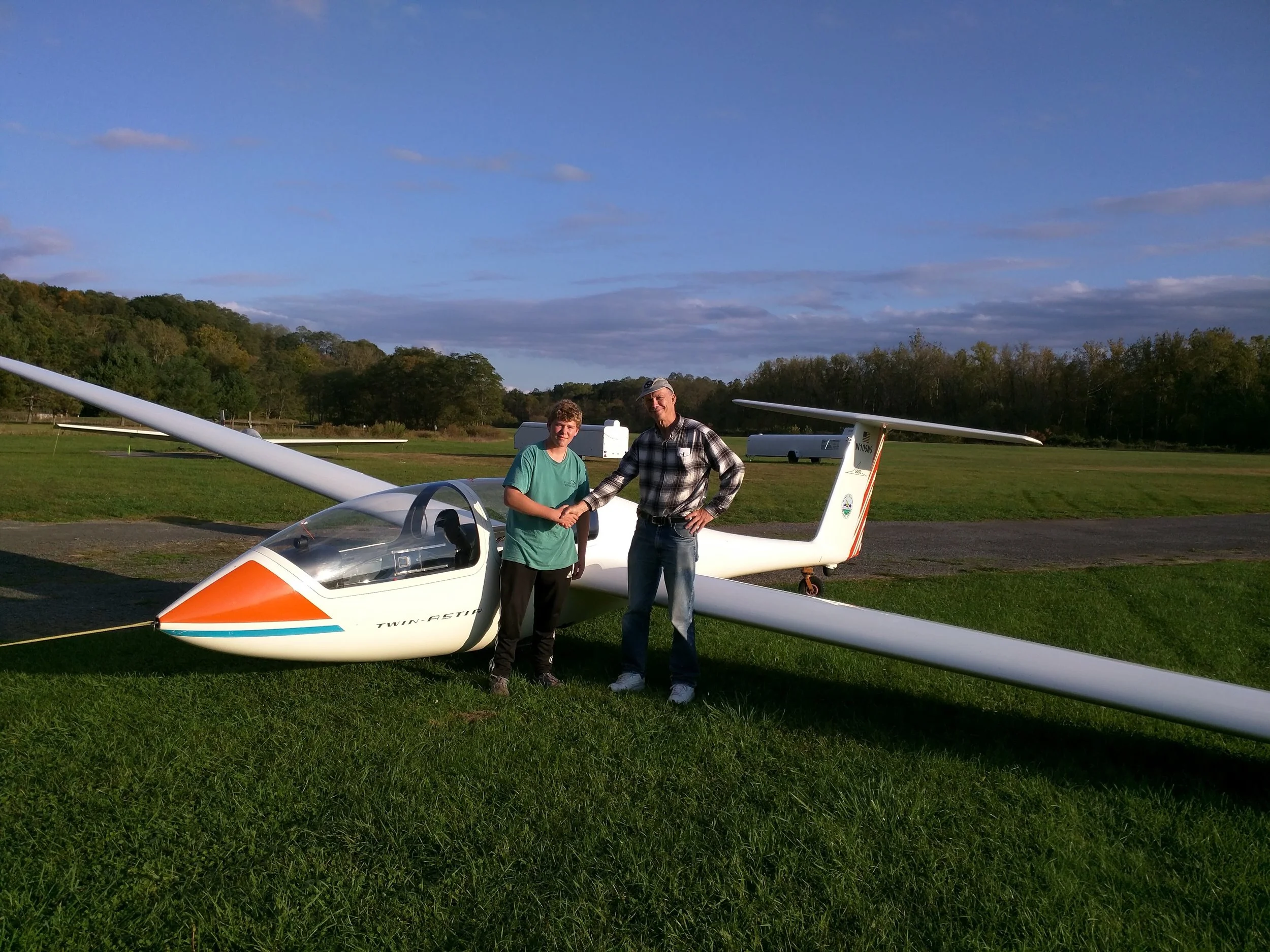
The best way to understand soaring is to come experience it for yourself. Take a trip up to Freehold, NY. One of our instructors will show you a sailplane and all of its parts and functions. You will get an overview of the flight you are about to take. Then you will go up with the instructor on a flight. Even if you choose not to go further it will be an experience to remember…
240LB Weight Limit
Flight Instruction and Glider Usage is Free with your Nutmeg Membership!
-Your only cost is the per flight Tow-
Advanced Training
-
Your training doesn’t stop with when you get your Glider Pilots license. Nutmeg can help you gain the skills required for safely making cross country flights. Flight planning, navigation, speed-to-fly calculations, advanced weather, and out landing skills all play into a successful and flight safe.
-
Nutmeg members have competed both at the National and World level. Our instructors can help you train as a competitive glider pilot. From what to expect on your first event to developing strategy… Nutmeg will be cheering you on the whole way.
-
For the experienced pilot, the ultimate goal should be to instruct the next generation of pilots. On the flight line you will see how we instruct student pilots and gain insight on the role of the Instructor. We will help you through the process to gain your Commercial and CFI-G ratings.
Your Journey to Becoming a Pilot…
Your first step is to take an introductory flight in a sailplane. That flight will introduce you to a world you have never known. And it is so exciting that you will want to explore it, to learn more about it and to become part of it. Accept that challenge and you are on your way to becoming a part of the world of the glider pilots.
As with any course of study, the more material you read on your own, the faster you'll learn and the more competent you'll be. This material such as the book "The Joy of Soaring" can be obtained from Nutmeg Soaring. You will be studying this material while you are taking your flight lessons, and after you have passed your FAA written examination and your flight instructor has given you his or her blessing, you will take your private pilot test. Passing that test will entitle you to take passengers for rides with you.
The closer together the lessons are, the easier it is to build on the knowledge gained from the previous lessons, and the faster you will learn. Most people try to fly at least once a week, and most prefer to take more than one flight during each lesson. The sailplane you will fly has dual controls, and your instructor will sit behind you with all the directional controls that you have and will show you the control motions or follow along with you as you are learning to glide the sailplane.
If you have not flown before, some of the maneuvers and coordination may seem difficult at first, just as riding a bicycle may have seemed nearly impossible when you were first learning. After a few flights, however, you will be making the sailplane do what you want it to do, and you will wonder why you felt so clumsy on your initial flights. Basically you learn to fly your sailplane straight-and-level, to turn it in varying degrees of bank, and to recognize and recover from stalls. You will practice flight courtesy and safety, and will glide down to enter the airport traffic pattern at a pre-determined altitude. You will fly your approach precisely, land your craft with its wings level, and stop it where you want to stop. You will learn emergency techniques so there will be no unexpected surprises for you when you become a licensed pilot.
You will learn that a sailplane is a docile and responsive machine that answers to gentle, coordinated pressures on its controls. As your touch develops, you will become less and less conscious of the control movements necessary to make it respond to your wishes.
How long it takes you to solo depends on a number of factors. They might include any previous pilot experience you have had, how open you are to your instructor's guidance, and how relaxed you are. Other factors would include the type of sailplane you are flying, the weather during your training, and the degree of experience and proficiency your particular training program requires before permitting you to solo. The requirement for an airport located on an uninterrupted plain in Kansas might well be different from the requirement for an airport cut out of a forest of Joshua trees.
You can solo if you are 14 years old or older. Most instructors feel that 30 to 35 flights of pre-solo flight time are the minimum needed for most people with no previous flight experience. An experienced private power pilot can generally solo a sailplane in 10 flights.
Cost of training from beginning through solo at a commercial gliderport will vary depending upon where it is and how rapidly you progress. Nutmeg Soaring is a non-profit club so after joining and paying an initiation and annual membership fee the cost of the aircraft and the instructor are free. Your only cost is the the nominal cost of the towplane. Naturally, all clubs exist with volunteer labor to reduce costs for all members. Each member will be expected to participate in the running of the club and its flight operations. After you have soloed, you will continue to fly with an instructor from time to time to see that you are maintaining good flying habits and developing your judgment and flying skills.
You will be eligible for a private glider rating if you (1) are 16 years old or older, (2) have had the FAA minimum solo time in a sailplane, and (3) have passed the FAA written examination. These regulations apply if you have had no previous FAA ratings. But if you already have a private or commercial power pilot rating with 40 hours of solo time, you can be licensed in gliders if you have a minimum of 10 solo flights during which 360 degree turns have been made, and have passed a flight test. No additional written FAA examination is required, although the oral test given by the flight examiner generally covers the same material which would be covered in the written examination.
A commercial rating allows the glider pilot to take passengers up for hire. Work toward a commercial glider license can begin after the private rating has been earned. Because of the increased responsibility, the requirements for a commercial glider pilot license are more stringent than for a private rating. An applicant for a commercial rating must be at least 18 years old.
A commercially rated power pilot may transition to a commercial glider rating by first having 20 solo glider flights during which 360 degree turns have been made, and then passing the FAA commercial glider flight test.
Learning to fly a sailplane safely is easy. The instructor can teach you the mechanics of flying the aircraft in just a few lessons. But don't be led too quickly into thinking that you have learned all there is to know. Learning to soar is a series of steps and plateaus. How high on that ladder you wish to climb is up to you. Some pilots are content, at least for a while to soar around an airport. Others find exhilaration and satisfaction in cross-country flight and ultimately in competing with other pilots. Learning while flying is fun; a fine balance of determination, flexibility and much practice is necessary to gain the proficiency and skills you will need to get the most out of your sailplane and your rating.
As noted previously, learning to fly a sailplane safely around the airport is easy. Learning to fly one skillfully is considerably more difficult. The sport requires alertness, self-control and self-discipline. It requires a combination of coordination, flexibility of thought, quick decision-making, and good judgment-all skills which can be achieved only through conscientious effort. The requirements for continually taking off and landing safely at the same airport are obviously not the same as those placed on a pilot who ventures into the unknown on a cross-country flight. Fortunately, most human beings have the inherent capability of becoming fine glider pilots. The more you learn, the more fun and personal satisfaction you will have. The rapid growth of the glider movement is testimony to the rewards and satisfaction other glider pilots have found in their chosen sport.